

 Copied to clipboard
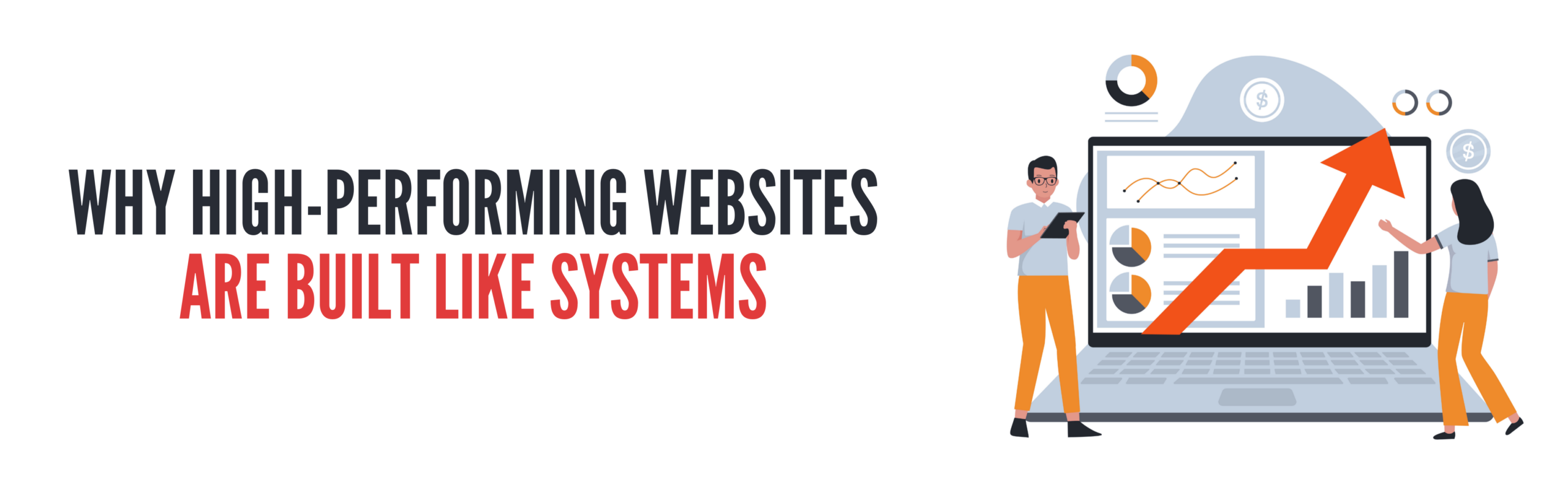
High-performing websites rarely succeed because of how they look alone. They perform well because they are built as systems that support clarity, navigation, and decision-making over time. When websites fail to convert, scale, or adapt, the root cause is often structural rather than visual.
Many teams still approach websites as collections of pages. Home, about, services, contact. Each page may look fine on its own, but together they often lack cohesion. Users feel this immediately. They hesitate, scroll aimlessly, or leave without completing an action. The issue is not the attention span. It is system design.
A Website Is an Experience, Not a Collection of Screens
Every website communicates how a business thinks. Structure, navigation, and content hierarchy reveal whether the organization understands its users or expects users to figure things out on their own.
When websites are built page by page, decisions are made in isolation. Design focuses on aesthetics. Content focuses on messaging. Development focuses on delivery. Without a shared system, these pieces never fully align.
System-based websites start from a different place. They define user intent first. What brings someone here? What they need next. What decision are they trying to make? Pages then become components in a larger flow rather than standalone artifacts.
Navigation Is a Reflection of Structure
Navigation is often treated as a design detail, but it is one of the clearest indicators of system quality. When navigation feels intuitive, users move with confidence. When it feels confusing, trust erodes quickly.
Clear navigation comes from clear thinking. It requires understanding how information connects and how users mentally group concepts. Good systems reduce choices without hiding information. They guide users instead of forcing them to search.
This is why visually attractive websites still struggle. If the underlying structure does not support logical movement, design cannot compensate.
Conversion Depends on Flow, Not Persuasion
Conversion problems are often blamed on copy, colors, or calls to action. While those elements matter, they only work when the path leading to them makes sense.
High-performing websites remove uncertainty step by step. Each section answers a question before the user asks it. Each transition feels natural. The user never wonders what to do next because the system makes it clear.
This level of clarity cannot be achieved through isolated optimizations. It requires treating layout, content, and navigation as parts of a single system designed to support decision-making.
Systems Make Websites Easier to Scale and Maintain
System-based websites rely on defined patterns, reusable components, and consistent logic. This makes changes easier to implement and easier for users to understand. Teams spend less time fixing inconsistencies and more time improving the experience.
Strong systems make work faster, decisions clearer, and teams more empowered. Outgrowing patchwork solutions is a milestone that shows your business is ready to scale efficiently.
From a development perspective, structure reduces technical debt. From a business perspective, it protects clarity as the organization grows.
Trust Is Built Through Consistency
Users may not consciously analyze a website’s structure, but they respond to it emotionally. Consistent patterns create familiarity. Familiarity builds trust. Trust increases engagement.
When layout, behavior, and messaging align across the site, users feel confident that the business behind it is organized and reliable. This perception directly impacts conversion, retention, and brand credibility.
High-performing websites earn trust not through promises, but through experience.
Building Websites That Perform Over Time
Designing websites as systems requires a shift in mindset. It prioritizes long-term usability over short-term visual impact. It values clarity over cleverness. It aligns design, content, and development around shared goals.
Teams that make this shift build websites that perform consistently, adapt smoothly, and support growth instead of resisting it.
A website built as a system does not just look good on launch day. It continues to work as the business evolves.
Turning Structure Into Results
High-performing websites succeed because they are designed with intention, structure, and user flow in mind. They treat navigation as guidance, content as context, and design as a tool for clarity.
When websites are built like systems, users do not struggle to understand them. They simply move forward.
That is what performance looks like.
RELATED Articles
Most businesses treat their website like a design project. Something that needs

AI sounds exciting in theory, but in reality, most businesses struggle to
Your website should guide visitors, provide value, and turn traffic into leads

Businesses today rely heavily on IT systems to manage operations, support teams,
Small teams thrive on flexibility. They solve problems quickly using spreadsheets, quick
Most leaders aren’t short on data. What they struggle with is trusting