

 Copied to clipboard
In the early stages of a business, software usually feels like it’s doing its job. Teams are small, tools are straightforward, and a lot of the process lives in conversations and shared understanding. Work moves fast because there are fewer handoffs, fewer dependencies, and far less data to manage.
As the business grows, that dynamic changes. More clients come in, teams expand, new tools are added, and data starts spreading across systems. What once felt efficient slowly becomes harder to manage.
When that happens, work begins to feel heavier. Simple tasks take longer, coordination requires more effort, and teams spend time maintaining systems instead of moving work forward. This slowdown is rarely about performance. More often, it is a sign that the underlying software and workflows were never designed to support this level of scale.

The hidden cost of growth
As businesses grow, complexity increases in ways that are easy to miss at first.
Work starts moving across multiple tools. Data lives in different places. Simple actions require coordination between teams, systems, and approvals. What used to be a single step quietly becomes five.
Most companies respond by adding more software. A new tool for reporting. Another for collaboration. An additional tool is needed to bridge the gaps. Over time, the stack grows, but the experience worsens.
The result is not faster work. It is more manual effort to keep everything aligned.
Manual handoffs become the bottleneck
When systems don’t communicate properly, people end up filling the gaps. Teams copy information from one tool to another, follow up just to make sure something moved forward, and double-check reports when numbers don’t line up. Over time, these manual handoffs slow work down and increase the chance of mistakes, especially as volume grows.
At a smaller scale, this kind of friction is often tolerated. As the business expands, it becomes a constant drain on productivity and focus. The software itself hasn’t failed, but it has reached the point where it can no longer support how the business actually operates.
Fragmented data slows decisions
Growth increases the demand for visibility. Leaders need clearer answers, faster. Teams need confidence that they are working with the right information.
When data is spread across systems that were never designed to work together, reporting becomes a project instead of a tool. Time is spent reconciling numbers rather than acting on them.
This delay compounds. Decisions take longer. Opportunities are missed. Teams lose trust in the systems meant to support them.
Scaling requires systems, not just tools
The core issue is not the quality of individual software tools. It is the absence of a system.
Scaling businesses need technology that is intentionally designed to support workflows, data flow, and decision-making as a whole. This often means rethinking how tools integrate, how automation is applied, and how processes are structured across teams.
Automation works best when it is built on clear, connected processes. Custom software adds value when it fits the way the business actually operates. Reporting becomes useful when data flows from a single source of truth.
Rebuilding for scale
Rebuilding does not always mean starting from scratch. It means identifying where friction exists, understanding how work truly moves through the organization, and designing systems that remove unnecessary steps.
When software is aligned with real workflows, growth feels lighter. Teams spend less time managing systems and more time moving work forward.
The goal is not more technology. It is better architecture.
And when systems are built to scale, growth stops feeling like a slowdown and starts feeling like progress again.
RELATED Articles
Most businesses treat their website like a design project. Something that needs
AI sounds exciting in theory, but in reality, most businesses struggle to
Your website should guide visitors, provide value, and turn traffic into leads
Businesses today rely heavily on IT systems to manage operations, support teams,
High-performing websites rarely succeed because of how they look alone. They perform
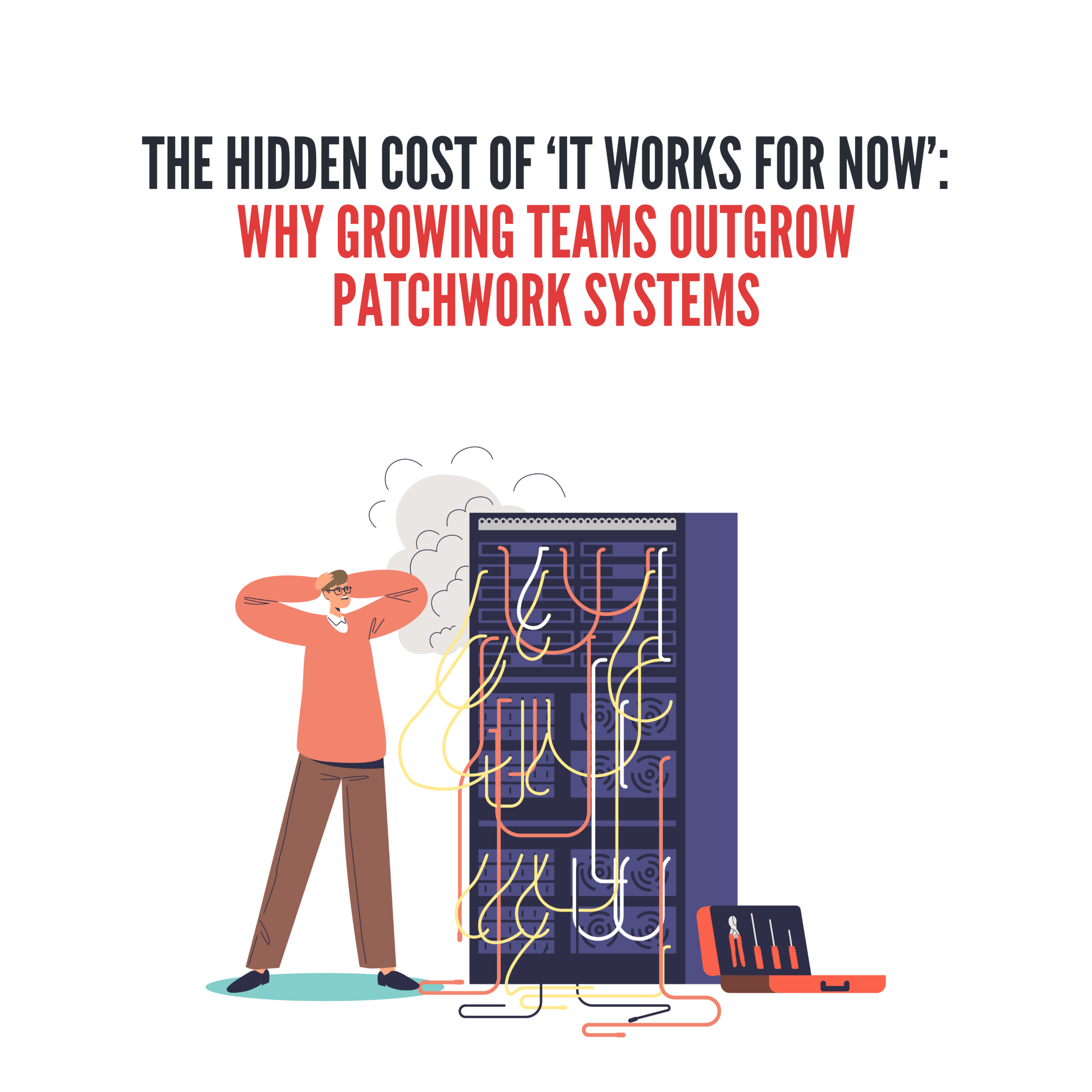
Small teams thrive on flexibility. They solve problems quickly using spreadsheets, quick