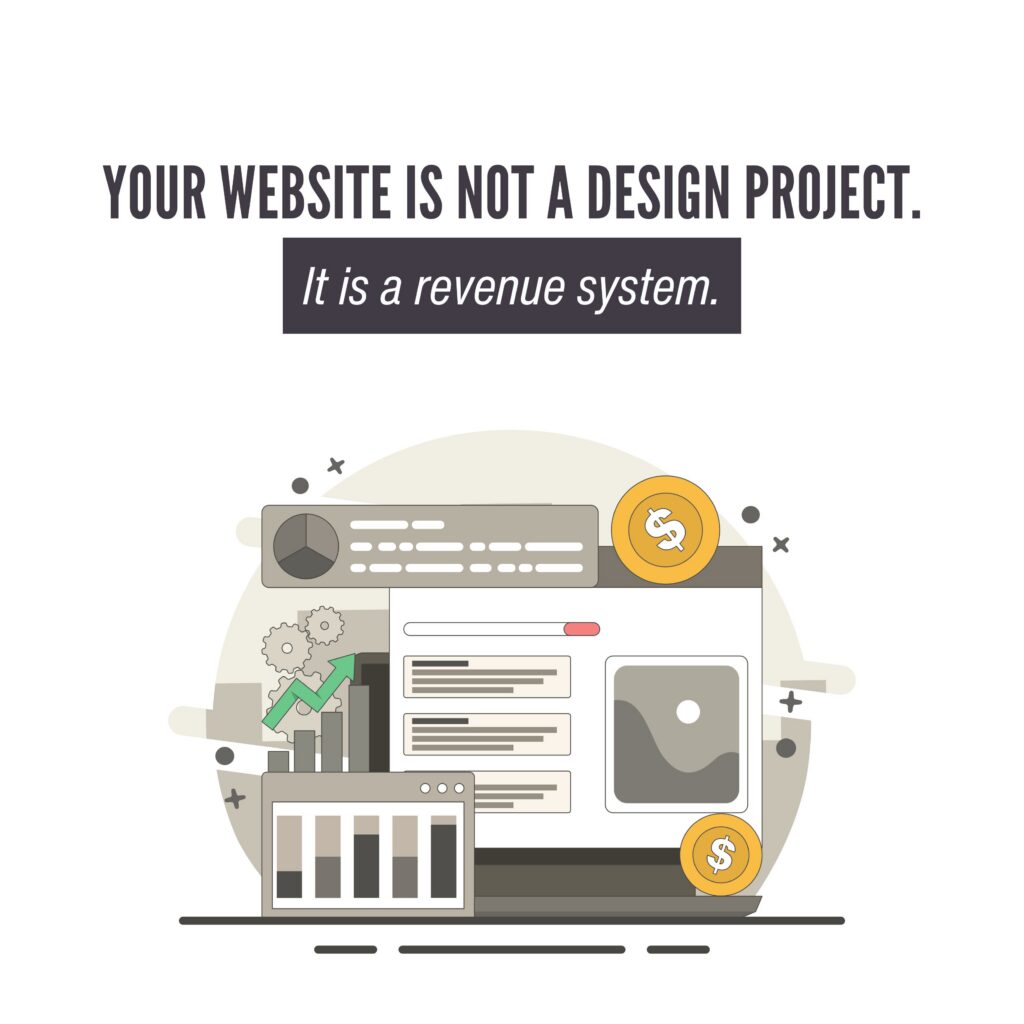
Your website should guide visitors, provide value, and turn traffic into leads or customers. Yet, many sites fail to convert visitors. Users browse your pages but leave without taking any action, which means lost opportunities.

Slow Loading Pages
Websites that take too long to load frustrate visitors. Even small delays increase the likelihood that users will leave before seeing your content.
Confusing Navigation
If visitors cannot find what they are looking for, they leave. Complicated menus, unclear links, and cluttered layouts create barriers.
Irrelevant or Weak Content
Content that does not match what users are searching for or lacks depth fails to engage visitors. Generic information reduces trust and encourages users to look elsewhere.
Missing Clear Calls-to-Action
Even interested users may leave if they do not know what to do next. Weak or hidden calls-to-action prevent conversions.
Poor Mobile Experience
Many visitors browse on mobile devices. Sites that are not mobile-friendly with easy-to-read layouts and touch-friendly features lose these users.
How These Problems Develop
These issues usually arise when the focus is on design rather than usability, or when businesses do not fully understand their audience. Traffic alone is not enough if the user experience does not guide visitors toward action.
How to Fix the Issues
- Improve Speed: Compress images, reduce unnecessary scripts, and use faster hosting to make pages load quickly.
- Simplify Navigation: Organize menus and links so visitors can easily find what they need.
- Provide Relevant Content: Match content to user needs, answer questions, and offer solutions that add value.
- Add Clear Calls to Action: Make CTAs visible, actionable, and persuasive to guide users to the next step.
- Enhance Mobile Experience: Design for mobile users with responsive layouts and touch-friendly elements.
Creating a Website That Converts
A website that is fast, easy to navigate, valuable, and mobile-friendly encourages visitors to stay and take action. Improving these aspects strengthens trust, engagement, and conversions.