

 Copied to clipboard
Most companies don’t realize how much their software stack is quietly draining productivity. What starts as a few tools to “make work easier” slowly snowballs into a tangle of apps, logins, and disconnected systems. Employees end up juggling spreadsheets, CRM platforms, project trackers, and chat tools, yet deadlines still slip, and reports still feel outdated.
The problem isn’t always the people or the process; it’s often the invisible gap between the software you already have and the software you actually need.
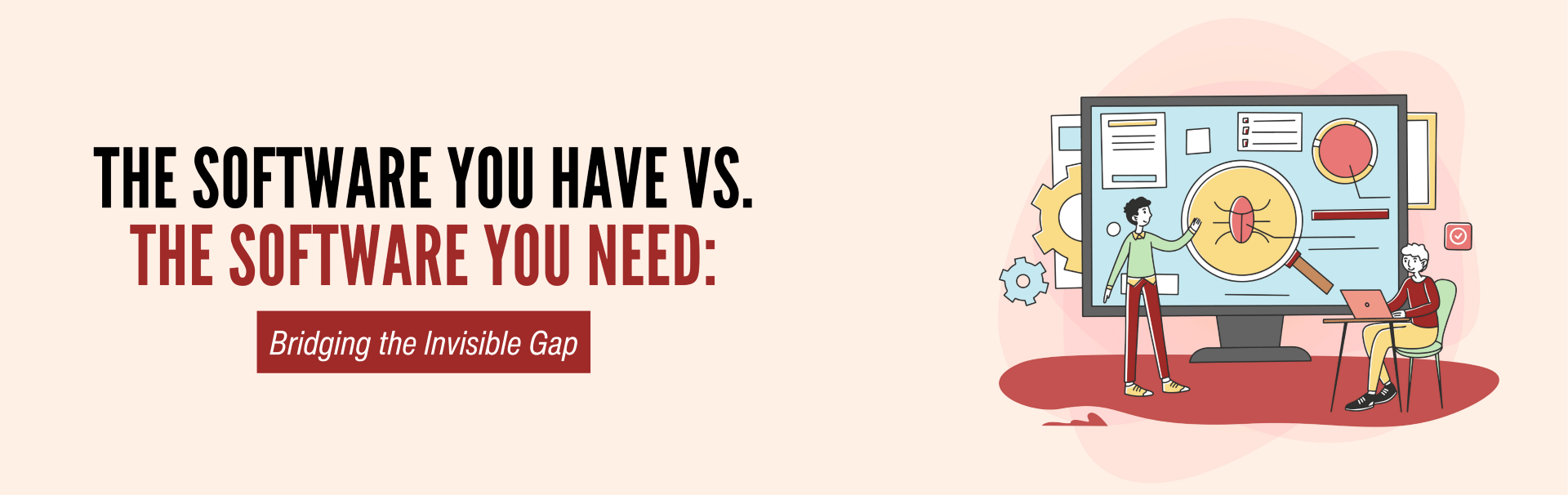
The Hidden Cost of Too Many Tools
On paper, software is supposed to streamline. In practice, it often fragments. A sales team might use one tool for lead management, another for outreach, and a third for reporting. Marketing might run campaigns in a system that doesn’t talk to sales’ CRM. Finance might be buried in spreadsheets, while operations relies on a dashboard that no one else can access.
The result? Everyone’s busy, but no one’s aligned. That “small gap” between tools creates duplicate work, human errors, and lost opportunities.
The Software You Have vs. The Software You Need
The software you have:
- A stack built over time, often chosen reactively.
- Multiple platforms that only partially integrate.
- Tools that make sense individually but don’t serve the business holistically.
The software you need:
- A system designed around business goals, not just tasks.
- Unified data that connects departments in real time.
- Scalable solutions that grow with the company instead of forcing workarounds.
Why the Gap Is Invisible (Until It Hurts)
It’s easy to accept software headaches as “just the way things are.” Teams become used to exporting data, chasing approvals across platforms, or manually fixing mismatched reports. The inefficiencies only reveal themselves when scaling becomes impossible, customer experience suffers, or competitors move faster because their systems work smarter.
Bridging this gap requires more than just adding another tool to the stack. It means stepping back, analyzing workflows, and designing a solution that’s truly aligned with how your business operates.
Bridging the Gap Starts Here
The companies that thrive aren’t the ones with the most tools; they’re the ones with the right tools, configured to fit their strategy.
Ready to bridge the invisible gap? At Devfinity, we design scalable, integrated software solutions that simplify complexity and align your business around growth.
Devfinity builds software that actually works for you. Contact us today!
RELATED Articles
Most businesses treat their website like a design project. Something that needs
AI sounds exciting in theory, but in reality, most businesses struggle to
Your website should guide visitors, provide value, and turn traffic into leads
Businesses today rely heavily on IT systems to manage operations, support teams,
High-performing websites rarely succeed because of how they look alone. They perform
Small teams thrive on flexibility. They solve problems quickly using spreadsheets, quick