

 Copied to clipboard
Most companies have dashboards.
They log in, scroll through charts, and export reports. On the surface, everything looks data driven. But behind the scenes, many teams are quietly asking the same question.
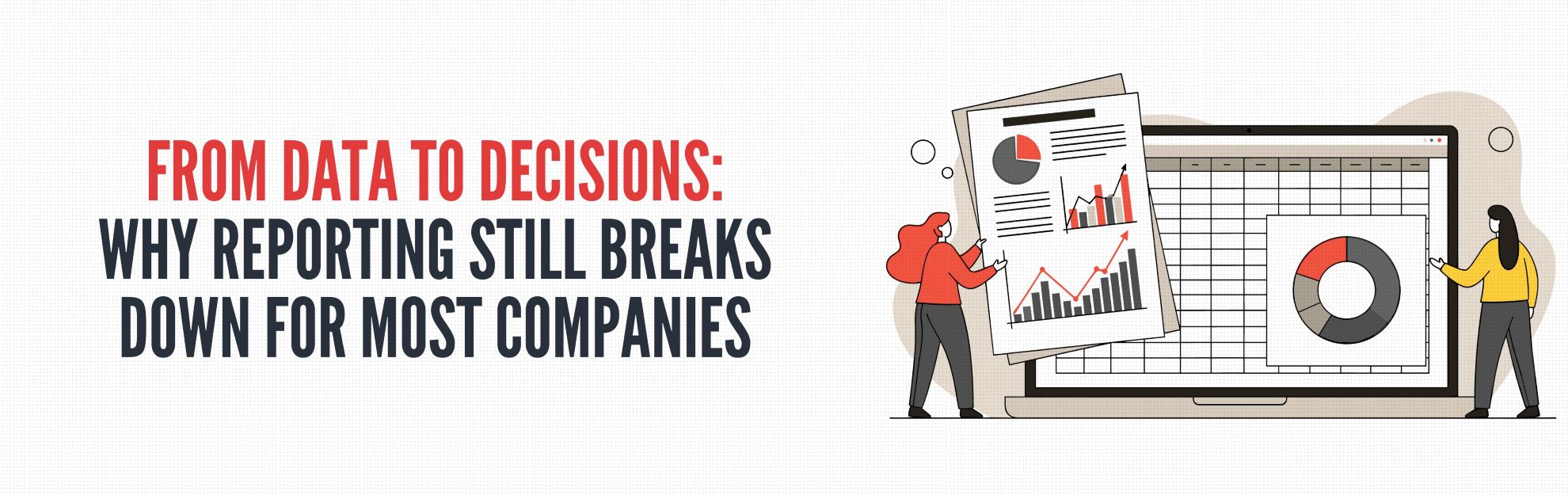
Can we actually trust these numbers?
When reports don’t line up, insights arrive too late, or teams spend hours validating data before making a decision, reporting stops being helpful. Instead of driving clarity, it becomes a blocker.
The Real Problem With Reporting Isn’t a Lack of Data
Growing companies are not short on data. They are overwhelmed by it.
Sales data lives in one system. Finance tracks numbers somewhere else. Operations rely on spreadsheets. Marketing uses a completely different set of metrics. Each report may be accurate on its own, but together they tell different stories.
That is when reporting starts to break down. Leaders are forced to ask which numbers are right, which version to use, and whether the data is current. By the time everyone agrees, the moment to act has often passed.
Why Dashboards Don’t Automatically Create Clarity
Dashboards are supposed to make decisions easier. But too often, they do the opposite.
Many dashboards are built to display data, not to answer questions. They show activity instead of insight. They focus on metrics without context. And they assume everyone interprets the numbers the same way.
Without clear definitions, aligned data sources, and a shared understanding of what matters most, dashboards become something teams look at, not something they rely on.
When Reporting Becomes a Bottleneck
Reporting breaks down when it creates more work instead of reducing it.
If teams need to double-check numbers before every meeting, trust is already lost. If reports require manual updates, data is always one step behind. If leaders wait days or weeks for insights, decisions slow down across the organization.
In these situations, data does not support growth. It quietly holds it back.
Turning Data Into Decisions Starts With Intent
Effective reporting is not about more charts or prettier dashboards. It starts with asking the right questions.
What decisions need to be made?
What information actually supports those decisions?
Who needs to see what, and when?
When reporting is designed around real business needs, data becomes easier to understand, easier to trust, and easier to act on.
What Strong Reporting Looks Like in Practice
Reporting works when it is built to support how teams actually operate.
That means:
- One source of truth instead of conflicting reports
- Clear definitions so everyone speaks the same data language
- Automated data flows that reduce manual effort
- Dashboards designed around decisions, not just metrics
- Insights that arrive when they are still useful
When these pieces come together, reporting stops being reactive. It becomes a tool leaders use with confidence.
Why Trust Matters More Than Volume
The goal of reporting is not to see everything. It is to see what matters.
A small number of trusted, well-designed dashboards will always outperform dozens of reports no one fully believes. Trust turns data into action. Without it, even the most detailed reporting loses value.When these pieces come together, reporting stops being reactive. It becomes a tool leaders use with confidence.
Reporting breaks down when data is disconnected from decisions.
Dashboards alone do not create clarity. Alignment does. When data, definitions, and business goals are connected, reporting becomes something teams rely on instead of question.
For growing organizations, this shift is what turns data from a constant headache into a competitive advantage.
RELATED Articles
Most businesses treat their website like a design project. Something that needs

AI sounds exciting in theory, but in reality, most businesses struggle to
Your website should guide visitors, provide value, and turn traffic into leads
Businesses today rely heavily on IT systems to manage operations, support teams,

High-performing websites rarely succeed because of how they look alone. They perform
Small teams thrive on flexibility. They solve problems quickly using spreadsheets, quick