

 Copied to clipboard
Many businesses invest in websites but still struggle to convert visitors into leads or customers. Slow load times, unclear messaging, outdated layouts, and poor user experience all play a role in pushing users away before they take action.
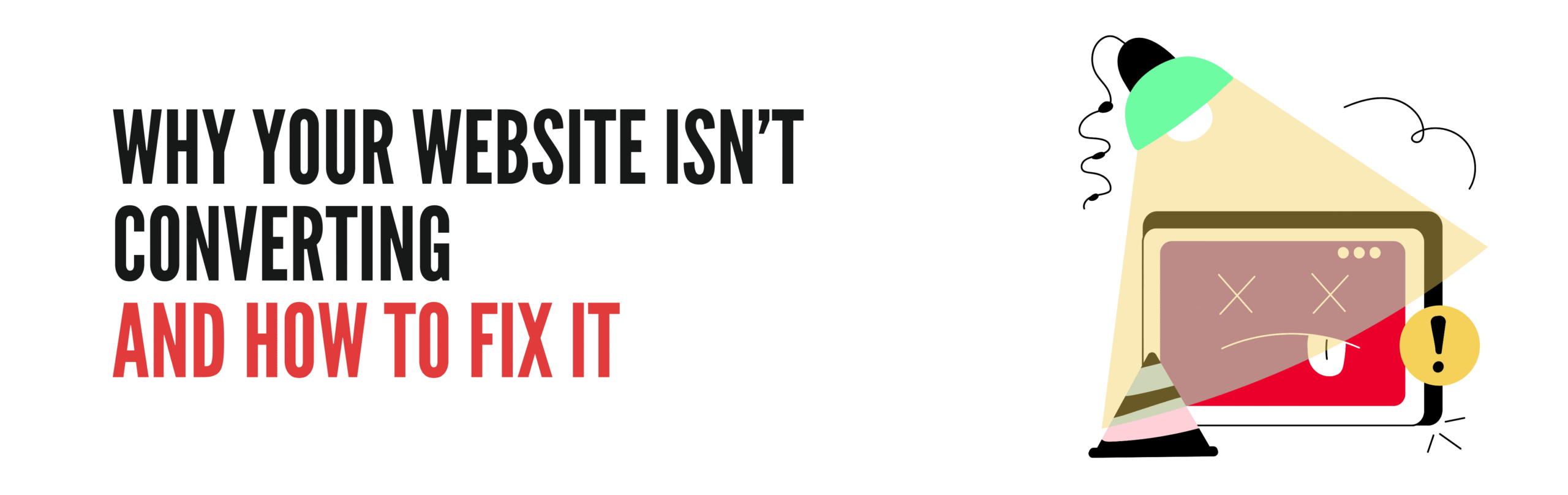
Conversion issues rarely come from one problem. They usually appear when small gaps in design, communication, and structure work together to create friction. The good news is that these problems are fixable, and with the right improvements, your website can become a reliable engine for growth.
Below are the most common reasons websites fail to convert and the changes that can turn your site into a high-performing asset.
1. Your Message Isn’t Clear Enough
Visitors decide in a few seconds whether your business is worth their attention. If your messaging feels vague, complicated, or focused on features instead of value, people lose interest.
To improve clarity, make sure visitors instantly understand:
- What your company offers
- Who you help
- What problem do you solve?
- What action you want them to take
Clear messaging reduces hesitation and increases trust, which directly impacts conversions.
2. Your Website Loads Too Slowly
A slow site is one of the fastest ways to lose potential customers. People do not wait for pages to load. If your site feels heavy or takes too long to respond, visitors leave before they see anything meaningful.
Improving speed through image optimization, efficient hosting, and updated development practices can immediately boost engagement and conversions
3. Your Layout Feels Outdated or Hard to Follow
A visually appealing website is important, but design should also guide users naturally toward key actions. If the layout feels cluttered, confusing, or outdated, people lose trust and feel unsure about what to do next.
Good design improves how users interact with information. It directs their attention, supports decision-making, and makes the entire experience feel easier.
4. Your User Experience Creates Friction
Even small issues can stop users from converting. This includes hard-to-find buttons, long forms, broken links, poor mobile experience, or pages that feel overwhelming.
Strong UX is about removing friction. When visitors can move through your website effortlessly, they are more likely to fill out a form, book a meeting, or make a purchase.
5. Your Content Is Not Built for Search Engines
A website can look polished but still fail to attract traffic if it is not optimized for search. If search engines cannot understand your content, they cannot rank it.
Improving SEO involves organizing content correctly, fixing technical issues, writing relevant copy, and making sure keywords match what your audience searches for. When people can find your website more easily, conversions improve naturally.
6. You Are Not Guiding Visitors Toward Action
Many websites explain what they do but forget to tell users what to do next. A strong call to action should feel natural, not pushy. It should help people take the next step.
Clear CTAs encourage conversions by reducing decision fatigue. When users know exactly where to go, they move forward with confidence.
Your Website Can Become a High-Performing Growth Tool
Fixing conversion issues is not about adding more design elements. It is about improving clarity, reducing friction, and making the experience feel smoother for your audience.
With the right updates in design, UX, and SEO, your website can turn into a reliable source of leads, customers, and long-term revenue.
What This Means for Your Business
A website converts when it feels easy to navigate, communicates clearly, and gives visitors a reason to trust your business. When you focus on speed, messaging, design, UX, and search visibility, your site becomes more than a digital brochure. It becomes a place where visitors can take the next step without hesitation.
RELATED Articles

Is your team spending too much time on repetitive tasks, struggling to
Data has always mattered, but 2026 will mark a turning point. It
Technology moves fast, and 2026 is shaping up to be a year
Automation isn’t just a nice-to-have anymore. By 2026, it will be a

Some companies move ahead while others fall behind, and the difference is

With 2025 nearly behind us, it’s time to look back at the