

 Copied to clipboard
Most businesses think a website is successful simply because it looks good or matches the brand’s vision. But the truth? Your website might be turning visitors away without you even realizing it. The real problem often isn’t design or speed; it’s perspective. Too many sites are built around the business, not the people using them.
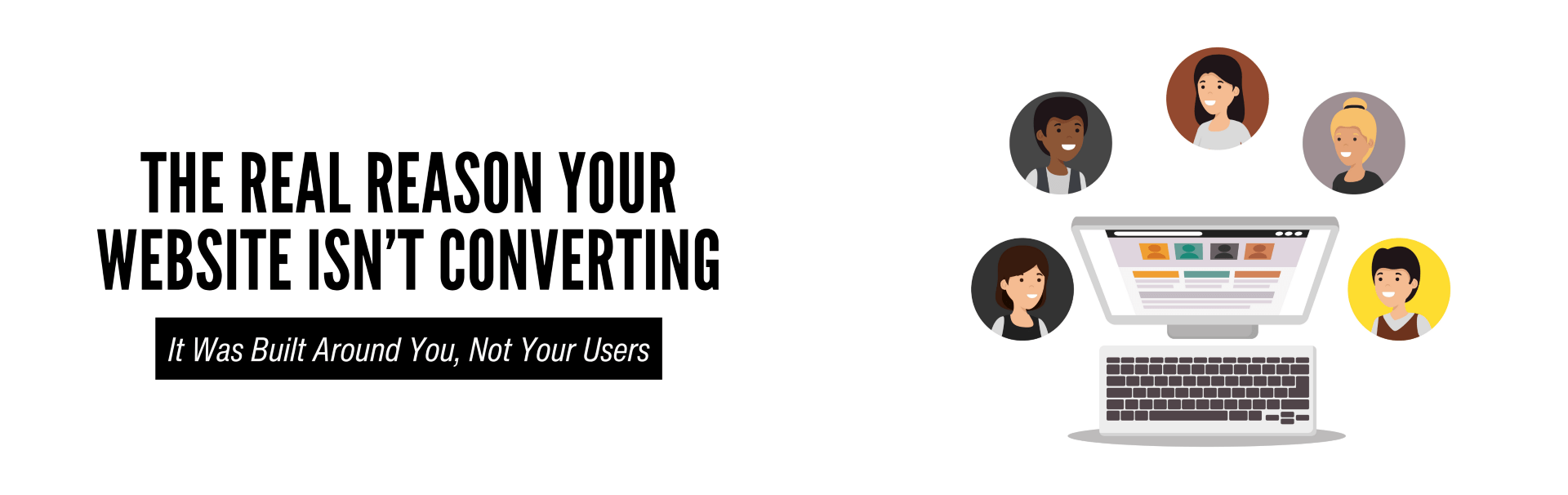
Why “Built Around You” Websites Fail
When a website reflects your priorities instead of your users’, visitors struggle to find what they need. The result:
- Confusing navigation that frustrates users
- Overloaded pages that hide key messages
- Calls to action that don’t resonate
A study by Forrester Research found that a well-designed user interface can increase a website’s conversion rate by up to 200%, and a better UX design can yield conversion rates up to 400%. The opposite? A site built around internal preferences risks losing customers before they even engage.
How Users Really See Your Website
Think about the last time you visited a confusing site. Chances are:
- You left within seconds.
- You didn’t return.
- You formed a negative impression of the brand.
Research backs this up: 88% of online users won’t return to a site after a bad experience (Forbes). And first impressions count; users form opinions in just 0.05 seconds (Forbes).
When your website puts your goals first instead of theirs, you’re inadvertently creating a roadblock to conversion.
Shifting Focus: From Business-Centric to User-Centric
A user-centric website prioritizes:
- Intuitive navigation: Visitors should effortlessly find what they need.
- Clear messaging: Speak your users’ language, not just your own.
- Fast performance: Every second counts; slow sites lose conversions.
- Conversion-focused design: Buttons, forms, and content guide visitors naturally.
- SEO and accessibility: Make sure users and search engines both understand your site.
The goal: Make your users feel understood and supported from the moment they land on your site.
Small Changes, Big Results
You don’t always need a full redesign. Focus on user-first tweaks:
- Simplify your navigation menu
- Clarify your value proposition above the fold
- Optimize forms for ease of use
- Use real user testing to spot friction points
Even minor improvements can lead to measurable gains in engagement, conversions, and customer trust.
The brands that thrive online are those that think like their users, test their assumptions, and continuously optimize their experience.
Start by asking: Are your visitors getting what they need, or are you building for yourself?
Schedule a UX review with Devfinity and see how small changes can make big conversions.
RELATED Articles

Websites now serve as dynamic hubs where businesses connect with customers, showcase

For years, Excel has been the go-to tool for business reporting. It
Many businesses invest in websites but still struggle to convert visitors into

Is your team spending too much time on repetitive tasks, struggling to
Data has always mattered, but 2026 will mark a turning point. It

Technology moves fast, and 2026 is shaping up to be a year